
Real-Time Ray Tracing: From NVISION Theoretical Papers to Live Dealer Tables at Online Casinos

Few technologies have made the leap from academic conference rooms to everyday entertainment as dramatically as real-time ray tracing. What began as a series of theoretical presentations and research papers at NVIDIA’s NVISION developer conferences has evolved into a cornerstone of modern digital experiences – including the booming world of online gambling. Today, the same rendering techniques once deemed too computationally expensive for live applications are powering the immersive visual environments that players encounter at top-tier casino platforms. For Hungarian players seeking to navigate this high-tech landscape, expert review portals like LegjobbKaszino where seasoned specialists rigorously test, evaluate, and rank online casinos based on safety, fairness, and overall quality – have become indispensable tools for finding platforms that truly deliver on their technological promises.
From Conference Hall to Consumer Hardware: The NVISION Legacy
NVISION was NVIDIA’s flagship developer and enthusiast event, held in the late 2000s, where the company laid out its vision for the future of graphics computing. Among the most consequential presentations were those dedicated to ray tracing – a rendering technique that simulates the physical behavior of light by tracing the path of individual photons as they bounce between surfaces.
At the time, real-time ray tracing was largely theoretical for consumer applications. Rendering a single photorealistic frame using ray tracing on available hardware could take minutes or even hours – completely impractical for interactive use. The NVISION papers, however, outlined a clear architectural roadmap: purpose-built hardware accelerators, known today as RT Cores, combined with AI-powered denoising, would eventually bring ray tracing to real-time speeds.
What Ray Tracing Actually Does
To understand why this matters for online casinos, it helps to understand what ray tracing changes visually:
- Accurate reflections – surfaces reflect the actual environment around them, not a pre-baked approximation
- Global illumination – light bounces naturally between surfaces, eliminating the flat, artificial look of rasterized graphics
- Realistic shadows – soft, graduated shadows replace the sharp, uniform shadows of older rendering pipelines
- Subsurface scattering – materials like skin, marble, and fabric interact with light in physically correct ways
- Atmospheric depth – fog, dust particles, and volumetric lighting behave according to real-world optics
These differences are subtle in screenshots but transformative in motion – and especially significant in environments where visual authenticity directly affects player immersion and trust.
How Ray Tracing Entered the Online Casino Industry
The path from NVISION whitepapers to live casino studios was not a straight line. It ran through game engine development, streaming infrastructure, and ultimately the competitive pressure among operators to differentiate their platforms visually.
The Game Engine Bridge
The major game engines – Unreal Engine and Unity – both integrated ray tracing support within years of NVIDIA’s RTX hardware launch. Online casino software providers, many of whom build their slot and table game engines on top of these platforms, gained access to ray tracing capabilities as a result. Suddenly, a slot game could feature a chandelier that accurately reflected the spinning reels beneath it, or a virtual poker table whose felt surface caught light differently depending on the angle.
This raised the visual bar across the industry. Players accustomed to flat, cartoonish slot aesthetics began encountering games with cinema-quality environments, and platform operators recognized that premium visuals were becoming a meaningful competitive differentiator.
Live Casino Studios and Cinematic Lighting
The most commercially significant application of ray tracing principles in online gambling has been in live casino production. While live dealer streams themselves are captured on physical cameras in purpose-built studios, the lighting design, virtual set overlays, and augmented reality elements increasingly rely on ray tracing-based rendering.
Studios operated by providers like Evolution Gaming and Pragmatic Play Live have invested heavily in physical lighting setups that deliberately mimic the outputs of ray-traced rendering – producing the kind of rich, directional illumination that makes a roulette wheel look genuinely three-dimensional on screen. Meanwhile, hybrid virtual-physical sets use real-time ray tracing to blend rendered backgrounds seamlessly with live footage.
Deposits, Minimum Stakes, and Payment Methods for Hungarian Casino Players
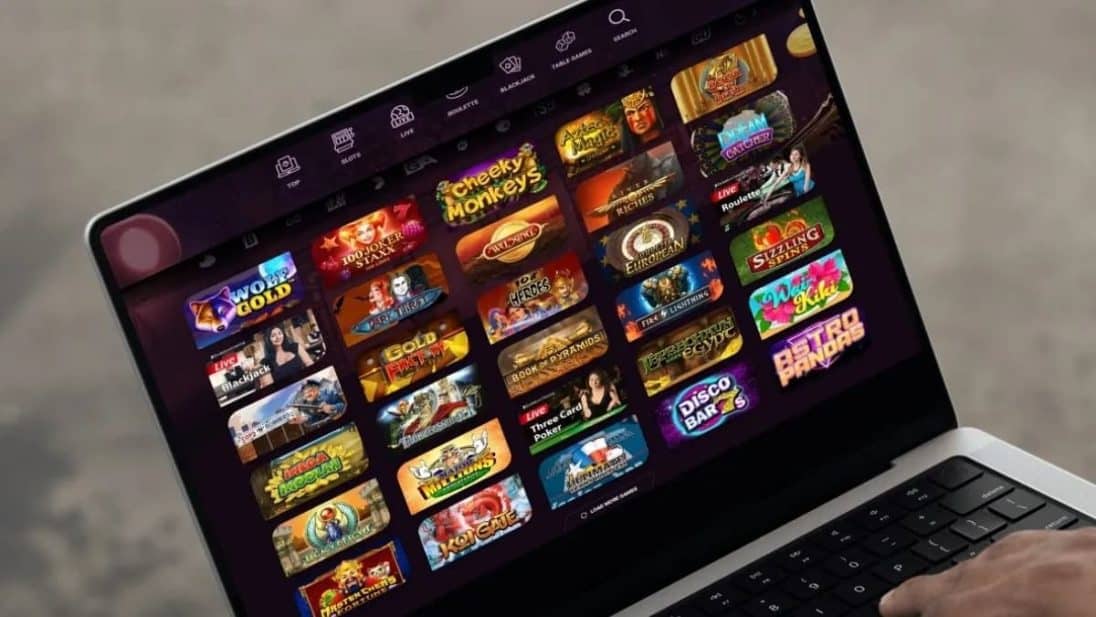
As rendering and streaming technology has matured, so has the accessibility of online casino platforms for players across different budget levels. The reduction in infrastructure costs enabled by more efficient GPU technology has allowed operators to lower their entry barriers significantly. Hungarian players today can find fully licensed platforms that accept a 1000 forints deposit casino minimum – meaning that even with a modest initial investment, players can access the same ray-traced visuals and live dealer tables available to high rollers, without committing significant funds before they are comfortable with a platform.
Popular Payment Methods at Hungarian Online Casinos
The range of deposit and withdrawal options available to Hungarian players has expanded alongside the technological evolution of the platforms themselves:
- Paysafecard – a widely available prepaid option that requires no bank account or card, ideal for privacy-conscious players
- Neteller – one of Europe’s most established e-wallets, trusted by players and operators alike for fast, secure transactions
- Revolut – a modern digital banking solution gaining significant traction among Hungarian players for its low fees and instant transfers
- Bitcoin and other cryptocurrencies – decentralized payment options offering fast processing and a degree of financial anonymity
- Visa & Mastercard – universally accepted debit and credit card payments with robust consumer protection frameworks
- Bank transfer to local Hungarian banks – direct forint-denominated transfers compatible with major domestic institutions including OTP, K&H, and Raiffeisen
- FunID (digital wallet) – a Hungarian-developed digital payment solution designed specifically for the local market, offering seamless integration with domestic banking infrastructure
Regarding currency, Hungarian players should be aware that the best platforms offer native Hungarian Forint (Ft / HUF) support, eliminating conversion fees on every transaction. Many internationally licensed casinos also operate in Euro (€ / EUR), which remains the default currency across much of the European market. Players are strongly advised to confirm currency settings before completing registration to avoid ongoing exchange costs.
Hungarian National Online Casinos: A Regulated Landscape
Hungary has developed a structured legal framework for online gambling, and several nationally licensed platforms have emerged as trusted destinations for local players. These casinos are regulated by the SZTFH (Supervisory Authority for Regulated Activities – Szabályozott Tevékenységek Felügyeleti Hatósága), the Hungarian government body responsible for overseeing gambling operators and ensuring compliance with national legislation.
Leading SZTFH-Licensed Platforms
Among the most prominent nationally regulated casinos operating in Hungary:
Vegas.hu is one of the most recognizable names in the Hungarian online gambling market, offering an extensive library that includes video slots, classic table games, live casino sections with real dealers, and virtual sports. The platform’s SZTFH license ensures that all games meet Hungarian fairness and responsible gambling standards.
Grand Casino brings a premium experience to Hungarian players, with a portfolio spanning hundreds of slot titles, a fully equipped live casino with blackjack, roulette, and baccarat tables, and a user interface optimized for both desktop and mobile play.
Kaszino.hu operates as a comprehensive hub for Hungarian players, featuring not only slot machines and table games but also detailed information about promotions, bonuses, and player protection tools – all within the framework of SZTFH regulation.
Xcasino.hu rounds out the domestic market with a modern platform offering an extensive selection of games including slots, live dealer tables, and specialty games. Like its peers, Xcasino.hu operates under full SZTFH oversight, giving Hungarian players confidence in the integrity of every game outcome.
The significance of SZTFH regulation cannot be overstated. Licensed operators are required to maintain segregated player funds, submit to regular audits, implement responsible gambling tools, and comply with Hungarian advertising standards – protections that unlicensed offshore platforms simply cannot guarantee.
The Future of Visual Technology in Online Gambling
Ray tracing is not the end point of this visual evolution – it is a milestone. Several emerging technologies are set to further transform what players see and experience at online casinos.
Neural rendering – AI models trained on millions of photorealistic images are beginning to generate game environments that are visually indistinguishable from photography, at a fraction of the traditional rendering cost.
Path tracing at consumer framerates – the successor to standard ray tracing, path tracing simulates the full complexity of light interaction in a scene. Hardware improvements are already bringing it within reach for real-time applications.
Volumetric live streaming – experimental systems can now capture live dealer environments in three dimensions, allowing players to view the table from any angle in real time, creating an experience closer to physical presence than conventional video streaming.
Haptic and spatial audio integration – as visual quality approaches photorealism, the industry is turning to spatial audio and haptic feedback to complete the immersive experience, with GPU-accelerated audio processing playing an increasingly central role.
Conclusion
The journey from NVISION conference presentations to the live dealer tables of today’s regulated Hungarian online casinos is a story of sustained technological ambition meeting genuine consumer demand. Real-time ray tracing, once a theoretical ideal, now shapes the visual language of the most competitive platforms in the market. For Hungarian players, the combination of sophisticated visual technology, robust SZTFH regulation, accessible minimum deposits, and a wide range of payment options has created a gaming environment that is simultaneously more immersive, more secure, and more inclusive than at any previous point in the industry’s history. The technology will keep advancing – and the best platforms will keep pace with it.