
Innovations and breakthroughs in GPU technology
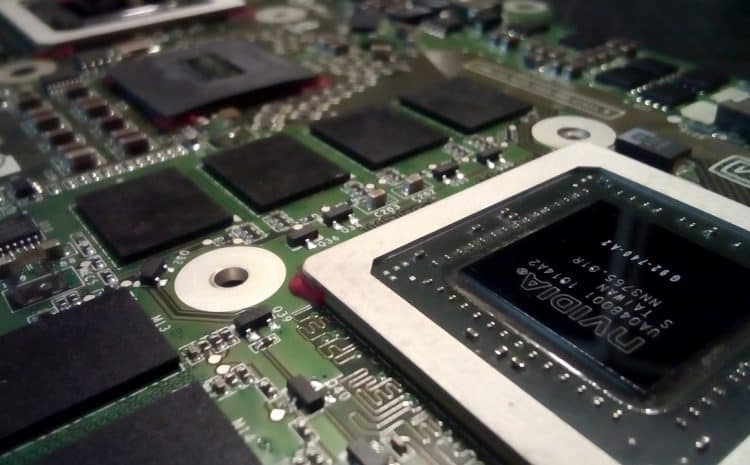
In recent years, there have been significant innovations and breakthroughs in GPU (Graphics Processing Unit) technology that have revolutionized various industries and opened up new possibilities for computing. GPUs, traditionally used for rendering graphics and accelerating gaming performance, have now become powerful tools for complex calculations and data processing.
Transforming Industries
GPUs’ parallel processing capabilities and high memory bandwidth make them well-suited for training and running neural networks, the backbone of AI algorithms. The ability to process massive amounts of data simultaneously has accelerated the development of AI models, enabling breakthroughs in computer vision, natural language processing, and data analytics. Industries ranging from healthcare and finance to manufacturing and transportation have leveraged GPU-powered AI to improve diagnosis accuracy, enhance financial modeling, optimize production processes, and develop autonomous systems.
Another industry that has witnessed a remarkable transformation through technology is healthcare. They have been instrumental in speeding up medical imaging processes, such as MRI and CT scans, allowing for faster and more accurate diagnoses. Deep learning algorithms running on them have been employed in medical research, enabling automated analysis of medical images and aiding in the early detection of diseases like cancer. They have played a crucial role in simulating complex biological systems, assisting drug discovery and development by reducing the time and cost associated with traditional methods.
The evolution can be traced back to their origins as specialized processors designed for rendering graphics. Over the years, manufacturers have made significant advancements in terms of processing power, memory capacity, and energy efficiency. Modern GPUs are no longer limited to gaming and graphics-intensive tasks.
One of the key innovations driving the evolution is the concept of programmability. Earlier GPUs were fixed-function devices, meaning their capabilities were limited to specific graphics tasks. However, the introduction of programmable shaders allowed developers to customize behavior, enabling it to perform non-graphics calculations. This breakthrough opened the doors computing, where could be used for general-purpose computing, transcending their original purpose.
To further enhance the computational capabilities, manufacturers have focused on increasing the number of processing cores. Modern consist of thousands of cores, enabling massive parallelism and faster data processing. The introduction of unified shader architectures streamlined design, allowing all cores to execute both vertex and pixel processing tasks, improving overall efficiency.
Additionally, advancements in GPU memory technology have been pivotal in expanding their application domains. High-bandwidth memory (HBM) and graphics double data rate (GDDR) memory standards have significantly increased memory capacities and data transfer rates, ensuring GPUs can handle large datasets and complex calculations efficiently.
The concept of general-purpose GPU (GPGPU) computing has opened up new possibilities for utilizing the massive parallel processing capabilities of GPUs. Developers have been able to harness the power of GPUs to accelerate scientific simulations, financial modeling, data analytics, and more.
To facilitate GPU computing, programming frameworks such as NVIDIA CUDA and OpenCL have emerged, providing developers with APIs and tools to write code that can execute. These frameworks abstract the complexities programming, making it more accessible to a wider range of developers.
The adoption computing has been particularly significant in high-performance computing (HPC). Supercomputers and research institutions have leveraged GPU clusters to accelerate scientific simulations and computational modeling. They have demonstrated their prowess in tackling computationally intensive tasks like weather forecasting, molecular dynamics simulations, and astrophysical calculations.
As the demand for accelerated computing continues to grow, we can expect further advancements in technology, pushing the boundaries of what is possible in computing.